

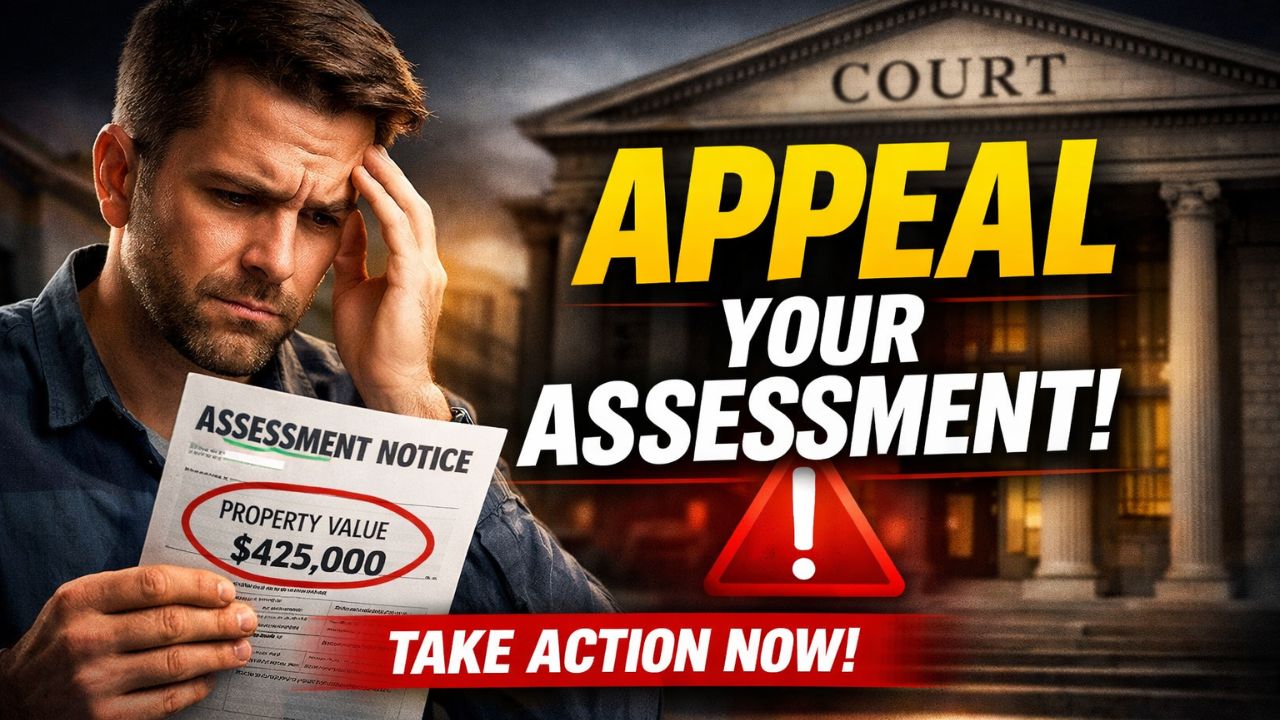
Your property tax bill is already set for 2026. Most Cuyahoga County homeowners have no idea.
Updated assessed valuations for Tax Year 2025 were released by the Cuyahoga County Fiscal Office on December 26, 2025 — right in the middle of the holiday week — and those figures will determine every property tax bill calculated throughout calendar year 2026. The release drew little attention. For many households, the first real signal will come when a bill arrives.
The good news is that a legal right to challenge that number still exists. The window, however, is closing.
What Happened
The Cuyahoga County Board of Revision is currently accepting formal complaints for Tax Year 2025. The filing period runs from January 1, 2026 through March 31, 2026 at 11:59 p.m. Eastern time. This deadline is established by Ohio Revised Code 5715.19, and there are no extensions or exceptions.
The current cycle follows the county’s 2024 sexennial reappraisal — the most sweeping property valuation event in recent years. That reappraisal, mandated under Ohio state law, showed an average increase of 32 percent in home values across Cuyahoga County, ranging from 15 percent in Hunting Valley to 67 percent in East Cleveland.
The financial consequences of those increases have been significant. As of December 10, 2025, the county was owed more than $248 million in overdue property taxes across approximately 25,000 parcels.
Why This Matters for Homeowners
A higher assessed value does not automatically guarantee a higher tax bill. But for most homeowners in Cuyahoga County, that is exactly what happened.
Many residents are facing tax increases of hundreds or even thousands of dollars annually, creating substantial budget challenges — particularly for seniors and individuals with disabilities on fixed incomes whose earnings do not rise alongside property tax obligations.
The complaint process exists specifically to address situations where a homeowner believes their assessed value is too high. Filing does not require an attorney, and the process is free when completed online.
Who Is Most Affected
Homeowners in neighborhoods that saw the steepest valuation increases are carrying the greatest burden. East Cleveland, Maple Heights, and parts of Cleveland itself absorbed some of the sharpest jumps during the 2024 reappraisal cycle.
Nearly 1,800 of the complaints filed for Tax Year 2024 were challenged — typically by the school district in which the property is located. Almost 1,000 of those challenges targeted residential properties. That detail matters: filing a complaint can trigger a counter-challenge that could result in a higher valuation if the property sold recently at a price above the county’s recorded market value.
Renters are also indirectly exposed. When tax costs rise for landlords, that pressure often moves into lease pricing at renewal time.
The Financial Impact Explained
Ohio law sets the assessed value of a property at 35 percent of its appraised market value. Multiply that assessed figure by the applicable millage rate to arrive at the tax owed.
A $100,000 home in Cleveland that increased in value at the city’s average rate during the reappraisal would now be valued at $149,000. That homeowner’s annual tax bill would rise from approximately $2,645 to $3,099 — an increase of roughly $454 per year, based on the county’s own tax calculator.
Scale that example up. A homeowner in a Cleveland suburb whose property moved from $175,000 to $230,000 following the 2024 cycle would see their assessed value climb from $61,250 to $80,500. At a modest effective rate, that shift alone could add $300 to $500 to their annual tax obligation.
These are not marginal differences. For households on tight budgets, they represent real financial stress.
What You Should Do Now
Start by pulling up the current assessed value for your property through the Cuyahoga County Fiscal Office’s online records. Divide that figure by 0.35 to determine the county’s implied market value. Then compare that number to recent sales of similar properties in your immediate area.
If the implied value seems significantly higher than what comparable homes are actually selling for, that gap is the foundation of a complaint.
The most persuasive evidence a homeowner can present is documentation of a recent sale of the property itself — a recorded deed, closing statement, or purchase contract. A recent professional appraisal is the next strongest option. Alternative supporting documents include dated photographs showing structural damage, certified contractor repair estimates, or certified new construction costs from a builder.
Property owners do not need to submit evidence at the time of filing. Evidence can be submitted up to seven business days before the scheduled hearing. The Board of Revision conducts hearings in person, by Zoom, and by phone.
Filing online is free and does not require notarization. A paper form requires a notary signature.
Important Dates and Deadlines
The Board of Revision will accept complaints for Tax Year 2025 from January 1, 2026 through March 31, 2026 at 11:59 p.m. Eastern time. This deadline is set by Ohio Revised Code 5715.19. There are no extensions or exceptions.
Mailed complaints will be accepted if they bear a United States Postal Service postmark of March 31, 2026 or earlier. Complaints sent via private carriers such as UPS or FedEx must be physically received by the Board of Revision on or before March 31, 2026.
Upcoming community assistance events, where Board of Revision staff will help residents complete and file their paperwork:
February 11, 2026 — Collinwood Recreation Center, 16300 Lakeshore Blvd., Cleveland, 6 to 8 p.m.
February 18, 2026 — Gunning Recreation Center, 16700 Puritas Ave., Cleveland, 6 to 8 p.m.
March 11, 2026 — Garfield Heights Civic Center, 5407 Turney Road, Garfield Heights, 6 to 8 p.m.
Official Context and Background
Under Ohio state law and Department of Taxation rules, real property is reappraised every six years by state-licensed appraisers. An increase in valuation does not automatically mean property taxes will increase — an appraisal represents a professional estimate of value.
The 2024 reappraisal was the county’s sexennial cycle. The Tax Year 2025 figures released in December 2025 reflect a triennial update — the midpoint adjustment between full reappraisal cycles.
More than 9,600 residential and commercial property owners filed complaints for Tax Year 2024. The county has not yet finished processing all of those cases. Homeowners who contested valuations after the 2024 reappraisal and received adjustments should verify that those adjustments appear correctly in the December 2025 figures. A discrepancy is grounds for a new complaint.
To reach the Board of Revision directly: call (216) 443-7195 or email BORinfo@cuyahogacounty.gov. Office hours are Monday through Friday, 8:30 a.m. to 4:30 p.m.
Key Takeaways
Cuyahoga County’s updated Tax Year 2025 property valuations took effect December 26, 2025, and will determine all 2026 tax bills. Homeowners have a legal right to challenge those figures through the Board of Revision. The filing deadline is March 31, 2026, with no exceptions under Ohio law. The process is free, can be completed online without a notary, and does not require an attorney. Evidence of actual market value — a recent sale, professional appraisal, or documentation of structural issues — is the strongest basis for a successful complaint. The county is holding free assistance events through March for residents who need help with the process.
Frequently Asked Questions
What is the deadline to challenge my Cuyahoga County property tax assessment?
The Board of Revision accepts formal complaints for Tax Year 2025 through March 31, 2026 at 11:59 p.m. Eastern time. This date is fixed by Ohio Revised Code 5715.19 and cannot be extended.
Do I need a lawyer to file a complaint?
No. Homeowners can file independently. The online filing portal is free and does not require notarization. A paper form requires a notary.
What evidence do I need?
A recent sale of the property, a professional appraisal, comparable sales data from your neighborhood, or documentation of structural damage and repair estimates. Evidence does not need to be submitted when you file — only before your scheduled hearing.
Can filing a complaint result in my taxes going up?
Yes, in some cases. School districts have the right to challenge complaints. If your property recently sold for more than the county’s recorded value, that sale price could be used to increase your assessment. Review comparable sales before filing.
Where can I get help filing?
The Board of Revision is hosting free in-person assistance events through March 11, 2026. You can also call (216) 443-7195 or email BORinfo@cuyahogacounty.gov during business hours.