

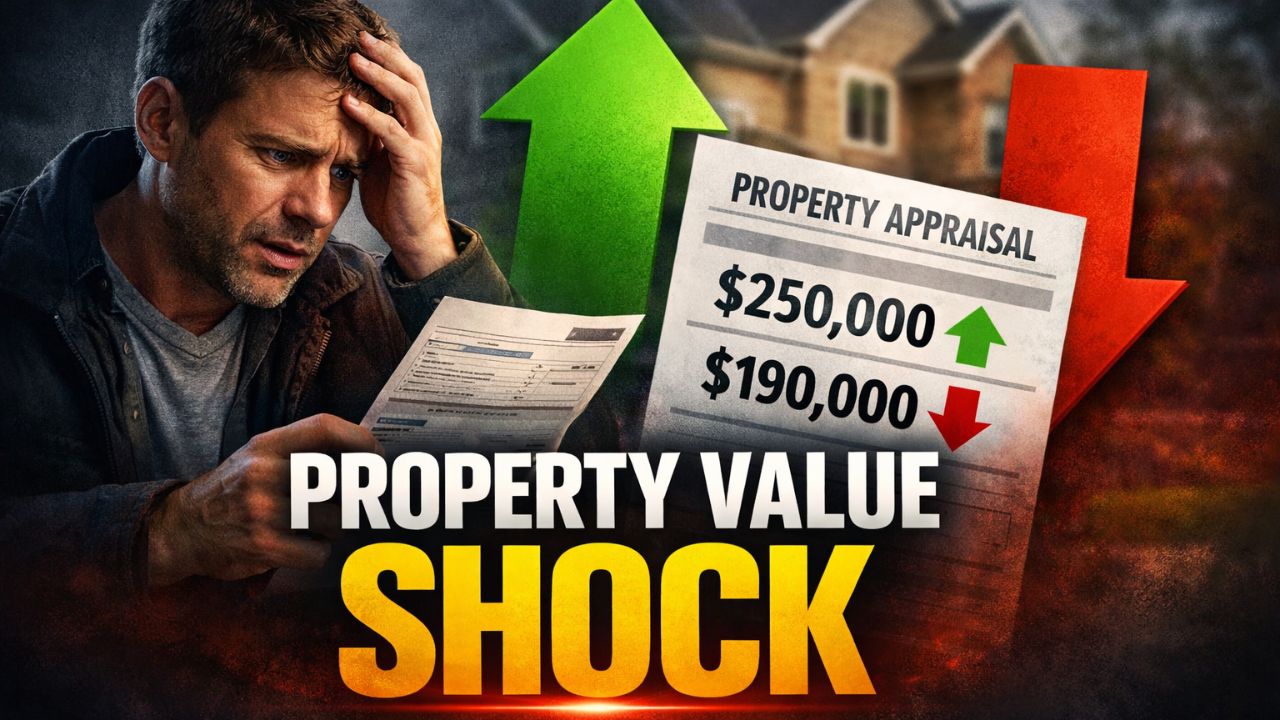
Your property tax bill didn’t get more expensive by accident.
For tens of thousands of Cuyahoga County homeowners, the number on their 2026 tax statement came as a genuine shock. Not because the county made an error — though some did — but because a seismic shift in how the county values property quietly took effect, and most people weren’t paying close attention when it happened.
The calls started coming in. Neighbors talking across fences. Families rereading their tax bills twice. A retired schoolteacher in Garfield Heights opening an envelope and doing the math three different times, convinced something had gone wrong.
Something had changed. Just not in the way most people expected.
What the County Actually Did
The Cuyahoga County Fiscal Office released updated assessed property valuations on December 26, 2025. These figures — officially designated Tax Year 2025 values — serve as the foundation for every property tax calculation made during calendar year 2026.
This wasn’t a surprise audit. It wasn’t a political decision. It’s part of Ohio’s mandatory reappraisal cycle. State law requires counties to conduct a full sexennial reappraisal every six years, with a triennial update at the midpoint.
The problem is that most homeowners don’t think about property taxes until the bill arrives. By then, the window to act is either closing fast — or already gone.
The proposed results of the 2024 sexennial reappraisal showed an average increase of 32% in home values across Cuyahoga County, ranging from 15% in Hunting Valley to 67% in East Cleveland. That 32% average sounds like an abstract statistic. It doesn’t feel abstract when you’re the one writing the check.
Here’s What That Looks Like in Real Money
Take a homeowner in Maple Heights. Their house was assessed at a market value of $120,000 before the reappraisal. Under Ohio’s tax structure, property taxes are not calculated on the full market value of your home — they are calculated on the assessed value, which is set at 35 percent of that market figure, then multiplied against the local millage rate for your taxing district.
So at $120,000, the assessed value was $42,000. After a 59% jump — consistent with what Maple Heights experienced during the 2024 reappraisal cycle — that market value climbs to roughly $190,800. The new assessed value: $66,780. Same house. Significantly different number feeding into the tax calculation.
Some inner-ring suburbs experienced property values nearly doubling, exacerbating the financial pressure on residents.
That’s not a rounding error. That’s a structural change in what homeownership costs in this county.
The Part Nobody Talks About
Here’s the counterintuitive detail that gets lost in almost every conversation about this: an increase in valuation does not necessarily mean your property taxes will increase.
That’s not a typo.
Ohio’s property tax system has built-in mechanisms — called “tax reduction factors” — that prevent certain levies from producing windfalls when values rise across the board. If everyone’s value goes up proportionally, the effective rate gets adjusted downward. The school district doesn’t automatically collect more just because the auditor assigned higher numbers.
But here’s the catch: it depends entirely on your specific taxing district, which levies are fixed versus floating, and what new levies may have been approved in your area. The direction and size of your tax bill shift depends on local market activity in each neighborhood. Two homeowners on opposite sides of a municipal line can experience completely different outcomes from the same reappraisal cycle.
This is where assumptions become expensive.
The Scale of the Financial Pressure Is Not Small
As of December 10, 2025, the county was owed more than $248 million for approximately 25,000 parcels of land — a figure that reflects how much financial strain the current valuation environment has placed on residents across the county.
$248 million in outstanding delinquent property taxes. That number doesn’t happen in a healthy system where every homeowner feels their assessment is accurate and manageable. It happens when people can’t keep up, or don’t know they have options.
More than 9,600 residential and commercial property owners filed complaints for Tax Year 2024. That number represents a fraction of the county’s roughly 570,000 active parcels. The overwhelming majority of property owners — people who may have had legitimate grounds to appeal — simply didn’t engage with a process that exists specifically to protect them.
Some didn’t know they could. Others missed the deadline without realizing one existed.
Who Should Be Most Concerned Right Now
Not every homeowner in Cuyahoga County is in the same position. But a few categories carry the most exposure.
Long-term homeowners in appreciating neighborhoods are the most vulnerable to overvaluation. If you bought your home ten or fifteen years ago and haven’t been tracking comparable sales closely, the county’s estimate of your market value may have climbed well past what your home would actually fetch in today’s market. The county uses statistical models and sales data — models that can skew high when nearby sales involve renovated properties or investor activity that doesn’t reflect your home’s actual condition.
The average value increase across the county was 32.22% for residential property, 8.45% for commercial property, and 8.49% for industrial property. Residential homeowners, in other words, absorbed the steepest increases by a significant margin.
Seniors and disabled residents have specific relief programs available that many aren’t using. The Homestead Exemption application period for 2026 is currently open. The income threshold is $41,000, based on 2025 Ohio Adjusted Gross Income. Social Security benefits are excluded from that calculation. That’s a meaningful detail — Social Security income doesn’t count against you when you apply.
The Appeal Window: What You Need to Know Now
This is where urgency becomes real.
The deadline to formally challenge your assessed value was March 31, 2026, established by Ohio Revised Code 5715.19, with no extensions or exceptions. For homeowners who missed that window, the next opportunity to file a complaint opens January 1, 2027.
That’s a long wait if your bill is wrong.
The process is free, accessible online, and does not require an attorney. Homeowners can file on their own through the Board of Revision portal. For higher-value properties or cases involving complex comparable sales analysis, professional representation may be worthwhile — but it is not required.
For anyone who did file a complaint following the 2024 reappraisal: property owners who contested their valuations and received adjustments should verify that those adjustments are correctly reflected in the December 2025 figures. If discrepancies exist, that is grounds for a new complaint.
The One Step Every Homeowner Should Take
Go to myplace.cuyahogacounty.gov. No account required. Search by your address or your permanent parcel number, which appears on your tax bill.
Look at the market value the county has assigned to your home. Then look at what comparable homes in your neighborhood have actually sold for in the past twelve months. If the county’s number is materially higher — particularly if your home has deferred maintenance, an unfinished basement, or other factors that would reduce sale price — you have the basis for a complaint.
An error in the record — a wrong square footage, an inaccurate bedroom count, a finished basement that doesn’t exist — translates directly into tax dollars you shouldn’t be paying. These errors are more common than most homeowners realize, and the county has no obligation to catch them on your behalf.
The system was not designed to be unfair. But it was also not designed to look out for you automatically.
That part is on you.
Data in this article is sourced from the Cuyahoga County Fiscal Office, the official county Board of Revision, and Ohio Revised Code. Tax Year 2025 assessed valuations were released December 26, 2025. Homeowners are encouraged to verify current deadlines and exemption eligibility directly with the county at cuyahogacounty.gov.