
Cuyahoga County Auditor Property Search® (Lookup by Name, Address & Parcel Number)
Searching for property information in Cuyahoga County doesn’t have to be complicated. Whether you’re a homeowner checking your tax assessment, a potential buyer researching a property, or a real estate professional gathering data for clients, the Cuyahoga County Auditor’s office provides valuable resources to access comprehensive property records.
This site will walk you through the entire process of finding and understanding property information using the county’s official tools.
With the right approach, you can quickly locate details about property ownership, valuation, tax history, and more. We’ll cover everything from basic search methods to understanding the results and practical applications of this information.

Cuyahoga County Property Records
The Cuyahoga County Auditor (now part of the Fiscal Officer’s office) maintains detailed records for over 500,000 parcels throughout the county. These records serve as the official documentation of property ownership, valuation, and taxation history. Understanding what these records contain helps you make the most of your property search.
What Property Records Include
- Property ownership information and transfer history
- Parcel identification numbers (unique identifiers)
- Property valuations and assessment history
- Tax district information and tax rates
- Legal property descriptions and boundaries
- Building characteristics and improvements
- Special tax designations or exemptions

Why Accurate Records Matter
Property records serve multiple important functions in Cuyahoga County. They establish legal ownership, determine property tax obligations, provide data for market analysis, and support real estate transactions. For homeowners, these records affect your tax bill and can impact property value. For buyers, they provide crucial information about a property’s history and characteristics.
Important Note: While the Cuyahoga County Auditor’s records are comprehensive, they should not be considered a substitute for a professional title search when purchasing property. Always consult with a real estate attorney and consider title insurance for property transactions.
How To Perform a Cuyahoga County Auditor Property Search
The Cuyahoga County Fiscal Officer’s website offers multiple ways to search for property information. Each method has advantages depending on what information you have available and what you’re trying to find.
Search By Property Address
The most common and straightforward search method is using the property’s street address. This is ideal when you know the exact location but don’t have the parcel number.
- Visit the official MyPlace property search portal
- Select “Address” from the search options
- Enter the house number and street name (without suffixes like “St” or “Ave”)
- Select the city from the dropdown menu
- Click the search button to view results
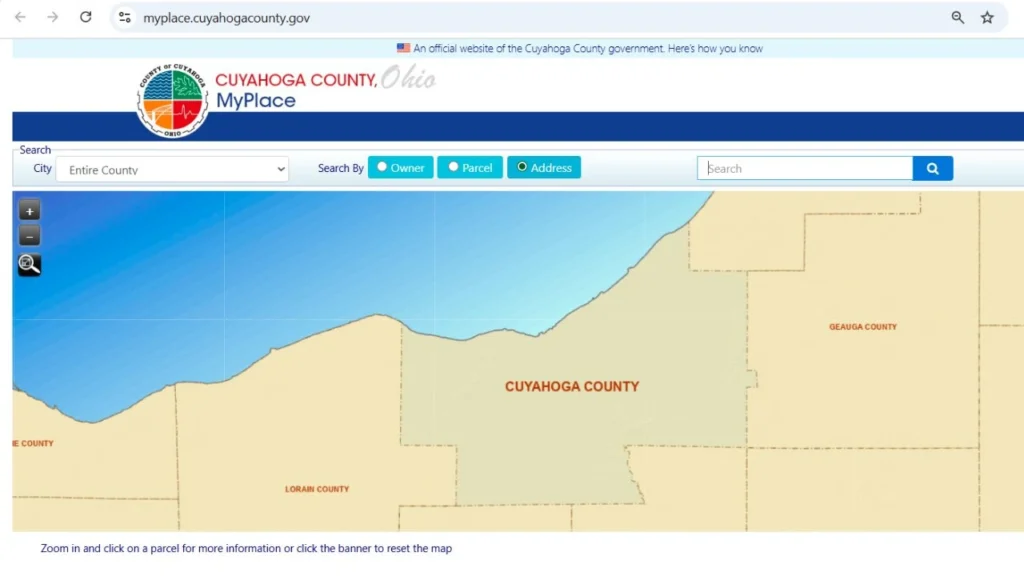
Pro Tip: If your search returns no results, try simplifying the street name or check for spelling errors. Some street names may be abbreviated or formatted differently in the database.
Search By Parcel Number (APN)
Searching by Permanent Parcel Number (PPN) is the most precise method, as each property in Cuyahoga County has a unique identifier. This is particularly useful for professionals or when dealing with multiple properties with similar addresses.
- Cuyahoga County parcel numbers are formatted as XXX-XX-XXX or permanently formatted as XXXXX-XXX-XXX
- You can enter the number with or without hyphens
- This method provides the most direct route to a specific property record
- Ideal when you already have the parcel number from tax bills, deeds, or previous searches
Where to Find Your Parcel Number: Look on your property tax bill, deed, or property assessment notice. The parcel number is typically listed prominently on these documents.

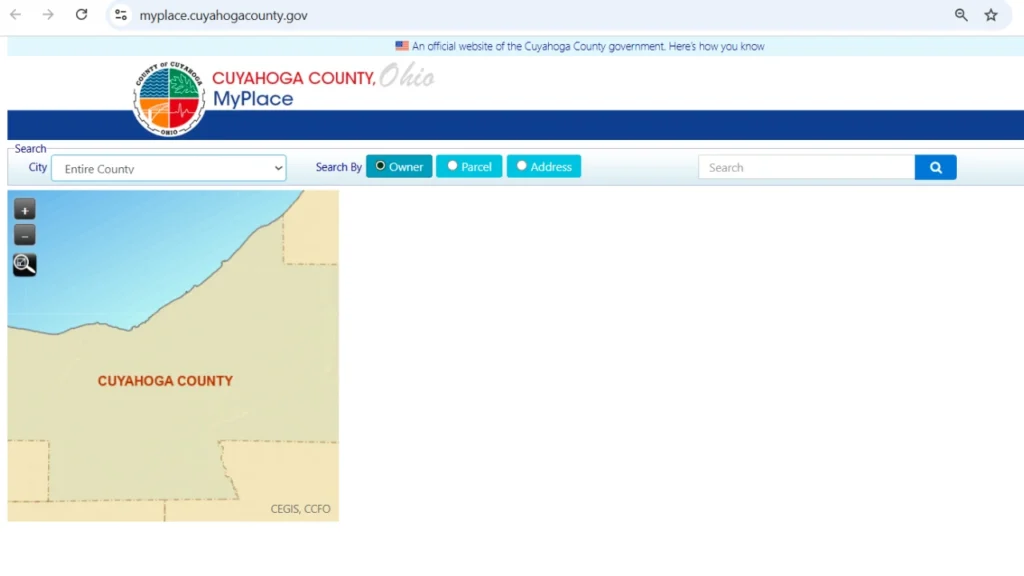
Search By Owner Name
When you know who owns a property but not its exact location or parcel number, searching by owner name can help you find the information you need.
- Select “Owner” from the search options
- Enter the owner’s last name (and optionally first name)
- Select the city if you know it (to narrow results)
- Click search to view all properties associated with that name
Caution: Owner name searches may return multiple results, especially for common names. The database only shows current owners, not previous ones. Names must match exactly as recorded in the system.
Search By Map/GIS
The Cuyahoga County GIS (Geographic Information System) map provides a visual way to search for properties. This method is particularly helpful when you’re not sure of the exact address or want to explore properties in a specific area.
- Access the interactive map through the property search portal
- Navigate by zooming and panning to find areas of interest
- Click on parcels to view basic information
- Access detailed property records from the map interface
The map view also shows property boundaries, which can be helpful when determining lot lines or identifying adjacent properties.

Analyzing Property Search Results
Once you’ve found a property in the Cuyahoga County Auditor’s database, you’ll have access to a wealth of information. Understanding how to interpret these results helps you make the most of your property search.
Owner Information
- Current owner name(s)
- Mailing address (may differ from property address)
- Ownership type (individual, business, trust)
- Transfer date of current ownership
Property Details
- Parcel ID number (PPN)
- Legal description
- Property address
- Land use code
- Lot dimensions and acreage
Valuation Information
- Current market value
- Assessed value (35% of market value)
- Land value vs. building value
- Historical valuation changes
- Special assessments
Ready To Search Cuyahoga County Property Records?
Access the official property search portal directly through the Cuyahoga County Fiscal Officer’s website.
If The Tool is not working properly, It May Be Temporary System Error, Try Again in 2 Minutes And It Will Start Working!
Additional Information Available
Tax Information
The property record includes detailed tax information, including:
- Current tax rates and districts
- Annual tax amounts
- Payment status and history
- Tax reduction programs applied
- Special assessments
For more detailed tax payment information, you may need to visit the Cuyahoga County Treasurer’s website.
Building Characteristics
For properties with structures, you’ll find information about:
- Year built and effective age
- Building style and construction type
- Square footage and room counts
- Number of stories
- Basement information
- Recent improvements or additions
Transfer History
The property record typically shows recent transfer history, including:
- Previous owners
- Sale dates and prices
- Deed types and transfer types
For more comprehensive deed and transfer information, you may need to visit the Cuyahoga County Recorder’s Office.

Property Valuation and Tax Assessment
Understanding how property values are determined and taxes are calculated in Cuyahoga County helps property owners make sense of their tax bills and assess whether their property valuation is accurate.
Market Value vs. Assessed Value
In Cuyahoga County, properties are taxed based on their assessed value, which is 35% of the market value determined by the Auditor’s office. For example:
| Market Value | Calculation | Assessed Value |
| $100,000 | $100,000 × 35% | $35,000 |
| $200,000 | $200,000 × 35% | $70,000 |
| $300,000 | $300,000 × 35% | $105,000 |
The market value is meant to reflect what the property would sell for in an open market transaction between a willing buyer and seller.

Reappraisal Cycles
Cuyahoga County follows a state-mandated schedule for property valuations:
- Sexennial Reappraisal: Every six years, all properties undergo a comprehensive reappraisal
- Triennial Update: Three years after each reappraisal, values are updated based on market trends
- Annual Updates: New construction and improvements are added to the tax rolls annually based on building permits
Common Tax Exemptions
Homestead Exemption
The Homestead Exemption provides significant property tax relief to qualifying senior citizens and permanently disabled homeowners. Eligible homeowners can shield up to $25,000 of their home’s market value from property taxes.
Eligibility: Homeowners who are 65 years or older or permanently disabled, with income below the threshold set by the state of Ohio.
For a homeowner with a $150,000 property, the Homestead Exemption would reduce the taxable value from $52,500 (35% of $150,000) to $43,750 (35% of $125,000), resulting in substantial tax savings.
How Property Taxes Are Calculated
Property taxes in Cuyahoga County are calculated by multiplying the assessed value by the total tax rate for your tax district. Tax rates are expressed in mills, with one mill representing $1 of tax for every $1,000 of assessed value.
Tax Calculation Formula: Assessed Value × Tax Rate (in mills) ÷ 1,000 = Annual Property Tax
Example: $70,000 (assessed value) × 80 mills ÷ 1,000 = $5,600 annual property tax
Tax rates vary by location within Cuyahoga County, depending on which school district, municipality, and special taxing districts apply to your property. The property search results will show the specific tax district and rate that applies to any property.
Practical Uses of Cuyahoga County Property Search
The Cuyahoga County Auditor’s property search tools serve different needs depending on who’s using them. Here’s how various users can benefit from accessing property records:
For Homeowners
- Verify that your property details are accurate
- Review your property valuation and compare to similar properties
- Understand your tax bill and identify potential exemptions
- Check for special assessments or liens
- Gather information for property tax appeals
- Research neighboring properties

For Property Buyers
- Research property history before making an offer
- Verify square footage and property features
- Estimate future property tax obligations
- Check for recent sales of comparable properties
- Identify the correct legal description
- Verify zoning and land use information

For Professionals
- Real estate agents: Gather accurate listing information
- Appraisers: Research comparable sales
- Attorneys: Verify ownership for legal proceedings
- Contractors: Check property dimensions for projects
- Researchers: Gather data for market analysis
- Tax professionals: Review assessment history

Need To Research Multiple Properties?
The Cuyahoga County GIS system allows for more advanced property research with mapping capabilities.
Access GIS Property MapsFrequently Asked Questions
How Do I Find My Cuyahoga County Parcel Number?
Your parcel number (also called Permanent Parcel Number or PPN) can be found on your property tax bill, deed, or property assessment notice. It’s typically formatted as XXX-XX-XXX or XXXXX-XXX-XXX. You can also find it by searching your property address on the Cuyahoga County Auditor’s website.
Why is My Assessed Value Different From My Home’s Market Value?
In Ohio, properties are taxed based on their assessed value, which is 35% of the market value determined by the Auditor’s office. For example, if your home’s market value is $200,000, the assessed value would be $70,000. This is the value used to calculate your property taxes.
How Can I Get a Copy of My Property Deed?
Property deeds are maintained by the Cuyahoga County Recorder’s Office, not the Auditor. You can search for and obtain copies of deeds through the Recorder’s website or by visiting their office in person at the Cuyahoga County Administrative Headquarters.
How Often Are Property Values Updated in Cuyahoga County?
Cuyahoga County conducts a full reappraisal every six years and a triennial update three years after each reappraisal. Additionally, new construction and improvements are added to the tax rolls annually based on building permits. The last full reappraisal was completed in 2018, with a triennial update in 2021.
What if I Believe My Property Valuation is incorrect?
Property owners who disagree with their valuation can file a complaint with the Cuyahoga County Board of Revision. Complaints must be filed between January 1 and March 31 of the current tax year. You’ll need to provide evidence supporting your claim, such as a recent appraisal or sales of comparable properties.
Can I Search for Historical Property Information?
The online property search typically shows current information and recent history. For older historical records, you may need to visit the Cuyahoga County Archives. They maintain property records dating back to the early 1800s, including tax duplicates, maps, and ownership information.
Are Property Records Public Information?
Yes, property records in Cuyahoga County are public information. Anyone can access basic property information through the Auditor’s website. However, some personal information may be redacted for privacy and security reasons.
How Do I Apply for The Homestead Exemption?
Eligible homeowners can apply for the Homestead Exemption through the Cuyahoga County Fiscal Officer’s website or in person. You’ll need to provide proof of age (65 or older) or disability, ownership, and residency. Applications are accepted year-round, but benefits begin in the year following application approval.
Conclusion
The Cuyahoga County Auditor property search system provides valuable access to comprehensive property information for homeowners, buyers, and professionals. By understanding how to navigate these resources effectively, you can make informed decisions about property ownership, taxation, and valuation.
Remember that while the online property search tools are extensive, they may not contain every historical detail or document related to a property. For more specialized research needs, the Cuyahoga County Archives, Recorder’s Office, and other county departments offer additional resources and assistance.
Ready To Start Your Property Search?
Access the official Cuyahoga County property search portal to find detailed information about any property in the county.
Search Cuyahoga County Property Records